Pre-Calculus Calculator
Solve pre-calculus problems online with our free Pre-Calculus Calculator. It can help you work with equations, functions, fractions, powers, roots, logarithms, and trigonometric calculations.
Enter your values or expression, choose the appropriate calculator, and get a quick result directly in your browser.
What Is a Pre-Calculus Calculator?
A pre-calculus calculator is an online math tool designed for problems commonly studied before calculus.
It can help with algebra, functions, polynomials, exponents, logarithms, trigonometry, complex numbers, and other precalculus topics.
Precalculus builds the mathematical foundation needed to understand more advanced topics such as limits, derivatives, and integrals.
How to Use the Pre-Calculus Calculator
Using an online pre calculus calculator is simple. Follow these steps to get a reliable result.
1. Enter Your Problem
Enter the numbers, variables, or mathematical expression you want to solve.
For example:
2x + 5 = 15
Check parentheses, negative signs, powers, and decimal points before calculating.
2. Choose the Right Calculator
Different mathematical problems require different methods.
Depending on your problem, you may need an algebra calculator, scientific calculator, fraction calculator, matrix calculator, or trigonometry calculator.
3. Calculate the Result
Enter the required values and click the Calculate button.
The calculator processes your input and displays the result.
4. Check Your Work
Try solving the problem yourself before using the calculator.
You can then compare your answer with the calculated result and identify possible mistakes.
What Can You Calculate With a Pre-Calculus Calculator?
Precalculus includes many areas of mathematics. Understanding these topics makes it easier to move on to calculus.
Algebraic Equations
Algebra is one of the main foundations of precalculus.
For example:
2x + 5 = 15
Subtract 5 from both sides:
2x = 10
Therefore:
x = 5
An algebra calculator can help you check equations and algebraic expressions.
Powers and Exponents
Exponents represent repeated multiplication.
For example:
2³ = 2 × 2 × 2 = 8
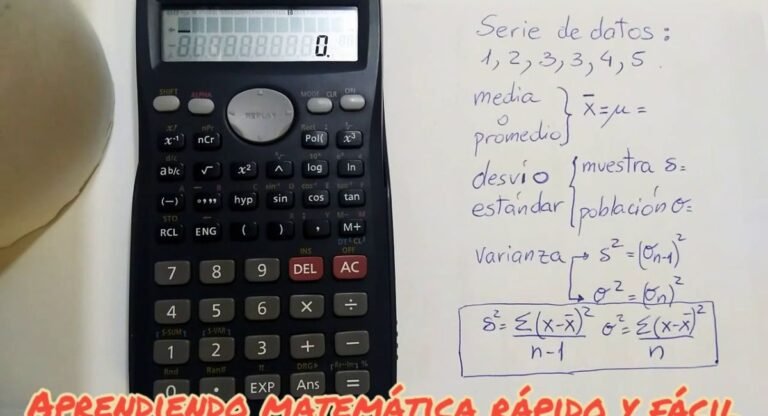
A scientific calculator can quickly calculate powers, roots, and other advanced operations.
Square Roots
Square roots are frequently used in algebra and precalculus.
For example:
√49 = 7
When working with more complicated expressions, a calculator can help verify your result.
Fractions
Fractions appear in equations, functions, ratios, and many other mathematical problems.
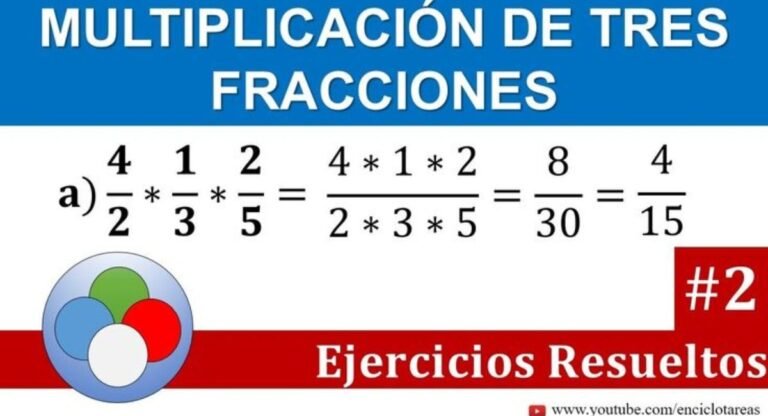
A fraction calculator can help you add, subtract, multiply, divide, and simplify fractions.
For example:
1/2 + 1/4 = 3/4
Trigonometry
Trigonometry is an important part of precalculus.
You may work with sin, cos, tan, sec, csc, and cot, as well as their inverse functions.
When using a calculator for trigonometry, always check whether the problem uses degrees or radians.
Logarithms
Logarithms are closely related to exponential functions.
For example:
log₁₀(100) = 2
because:
10² = 100
A logarithm calculator can help evaluate logarithmic expressions and check your calculations.
Factorials
Factorials are written using an exclamation mark.
For example:
5! = 5 × 4 × 3 × 2 × 1 = 120
Factorials are commonly used in combinations, permutations, and probability.
Matrices
Matrices are rectangular arrangements of numbers used in algebra and other areas of mathematics.
A matrix calculator can help with operations such as matrix addition, multiplication, determinants, and inverses.
Important Pre-Calculus Topics
Precalculus connects several mathematical ideas. Here are some of the most important topics to understand.
Functions
A function connects an input to exactly one output.
For example:
f(x) = 2x + 3
If x = 4:
f(4) = 2(4) + 3 = 11
Understanding functions is essential for studying calculus later.
Domain and Range
The domain is the set of possible input values of a function.
The range is the set of possible output values.
Knowing how to find domain and range helps you understand graphs and function behavior.
Polynomials
A polynomial is an expression containing variables with non-negative whole-number powers.
For example:
x² + 5x + 6
You may need to factor polynomials, find their zeros, or determine their degree.
A polynomial calculator can help you check these calculations.
Exponential Functions
An exponential function contains a variable in the exponent.
For example:
y = 2ˣ
Exponential functions are used to describe growth, decay, and other changing quantities.
Logarithmic Functions
Logarithms are the inverse of exponential functions.
For example:
log₂(8) = 3
because:
2³ = 8
Learning the relationship between logarithms and exponents is an important precalculus skill.
Trigonometric Functions
The main trigonometric functions are sine, cosine, and tangent.
Other common functions include secant, cosecant, and cotangent.
These functions are used to study angles, triangles, waves, and periodic behavior.
Complex Numbers
Complex numbers contain a real part and an imaginary part.
For example:
3 + 2i
where:
i² = -1
A complex number calculator can help with operations involving complex numbers.
Pre-Calculus Graphing
Graphs make it easier to understand how a function changes.
A graphing calculator can help you visualize functions, intercepts, curves, and other important features.
For example:
y = x² - 4x + 3
The graph can help you identify where the function crosses the x-axis and understand its overall shape.
Finding the Vertex of a Parabola
A quadratic function can produce a parabola.
For a function such as:
y = x² - 4x + 3
the vertex tells you where the graph reaches its minimum or maximum point.
A parabola calculator can help you find important properties such as the vertex and axis of symmetry.
Conic Sections in Precalculus
Conic sections are important curves studied in precalculus.
They include:
- Circles
- Parabolas
- Ellipses
- Hyperbolas
A conic section calculator can help you work with their equations and properties.
Circle
The standard equation of a circle is:
(x - h)² + (y - k)² = r²
Here, (h, k) represents the center and r represents the radius.
Ellipse
An ellipse is an oval-shaped conic section with a major axis and minor axis.
Its equation and properties can be analyzed using algebraic and geometric methods.
Hyperbola
A hyperbola consists of two separate branches.
Its equation can be used to determine features such as its center, vertices, and asymptotes.
How to Solve a Pre-Calculus Problem
You can use a simple process to solve almost any pre calculus problem.
Step 1: Understand the Question
Read the problem carefully and identify exactly what you need to find.
Step 2: Identify the Topic
Determine whether the problem involves an equation, function, polynomial, fraction, exponent, logarithm, or trigonometry.
Step 3: Choose a Formula or Method
Select the mathematical rule that matches the problem.
Do not enter values into a calculator before understanding what you are trying to calculate.
Step 4: Enter the Expression Carefully
Enter the expression exactly as it appears in the problem.
Pay special attention to parentheses, negative numbers, fractions, and exponents.
Step 5: Check the Result
Compare the calculator’s result with your own work.
If the answers are different, check the original expression and your calculation steps.
Pre-Calculus Example
Let’s solve a simple quadratic equation:
x² - 5x + 6 = 0
First, factor the equation:
(x - 2)(x - 3) = 0
Set each factor equal to zero:
x - 2 = 0
So:
x = 2
And:
x - 3 = 0
So:
x = 3
Therefore, the solutions are:
x = 2 and x = 3
You can use an equation calculator or quadratic calculator to check the result.
Why Use an Online Pre-Calculus Calculator?
Save Time
An online calculator can perform repetitive calculations quickly.
This allows you to spend more time understanding the mathematical concept.
Check Your Answers
You can solve a problem manually and then use the calculator to verify your result.
This is useful when practicing homework or preparing for an exam.
Practice More Problems
Quick calculations make it easier to practice different types of questions.
You can work through equations, functions, polynomials, and trigonometry without spending unnecessary time on basic arithmetic.
Find Calculation Errors
A calculator can help identify mistakes involving negative signs, fractions, powers, or decimal values.
However, always check your input because an incorrect expression will produce an incorrect result.
Use It Anywhere
An online pre calculus solver works through a web browser.
You can use it on a computer, tablet, or mobile phone without installing separate software.
Scientific Calculator for Pre-Calculus
A scientific calculator is useful for more advanced mathematical operations.
It can handle powers, roots, logarithms, factorials, and trigonometric functions.
For trigonometric calculations, always select the correct angle mode: DEG for degrees or RAD for radians.
Algebra Calculator for Pre-Calculus
Algebra provides the foundation for many precalculus topics.
An algebra calculator can help you check equations, expressions, factoring, polynomial calculations, and other algebra problems.
Strong algebra skills can make more advanced precalculus concepts easier to understand.
Fraction Calculator for Pre-Calculus
Fractions appear in many algebra and precalculus problems.
A fraction calculator can help perform addition, subtraction, multiplication, division, and simplification.
This is especially useful when an expression contains several fractions.
Matrix Calculator for Advanced Math
Matrices are used in algebra and higher-level mathematics.
A matrix calculator can help with matrix multiplication, determinants, inverses, transposes, and other matrix operations.
Common Pre-Calculus Mistakes
Using the Wrong Angle Mode
Using degrees instead of radians, or radians instead of degrees, can produce an incorrect trigonometric answer.
Always check the angle mode before calculating.
Losing a Negative Sign
A missing negative sign can completely change the result.
Check positive and negative values carefully.
Incorrect Order of Operations
Expressions with multiple operations must follow the correct order of operations.
Use parentheses when needed to make the intended calculation clear.
Entering the Wrong Expression
A calculator cannot correct incorrect input.
Double-check brackets, powers, fractions, and negative signs before pressing Calculate.
Tips for Better Pre-Calculus Practice
Try the Problem Yourself
Attempt the problem before using a calculator.
This helps you understand the method instead of relying only on the final answer.
Understand the Formula
Do not simply memorize formulas.
Learn what each part of the formula represents and when it should be used.
Practice Different Topics
Practice functions, equations, polynomials, trigonometry, logarithms, complex numbers, and graphs.
Working with different problem types helps strengthen your overall precalculus skills.
Review Your Mistakes
If your answer does not match the calculator, find the step where your work changed.
This can help you identify areas that need more practice.
Frequently Asked Questions
What is a pre-calculus calculator?
A pre-calculus calculator is an online tool that helps with mathematical problems involving functions, equations, polynomials, powers, roots, logarithms, trigonometry, and other precalculus topics.
Can I solve pre-calculus problems online?
Yes. An online pre calculus solver can help you calculate and check many common precalculus problems.
Is a scientific calculator useful for pre-calculus?
Yes. A scientific calculator is useful for powers, roots, logarithms, factorials, and trigonometric calculations.
Can I calculate sin, cos, and tan?
Yes. A scientific or trigonometry calculator can calculate sin, cos, tan, and other trigonometric functions.
Should I use degrees or radians?
It depends on the problem.
Use degrees when the angle is given in degrees and radians when the problem uses radians.
Can I solve quadratic equations?
Yes. You can use an equation calculator or quadratic calculator to check the solutions of quadratic equations.
Can I calculate fractions?
Yes. A fraction calculator can perform common fraction operations and simplify results.
Can I use a pre-calculus calculator on my phone?
Yes. Because it works online, you can access the calculator through a web browser on a phone, tablet, or computer.
Try Our Pre-Calculus Calculator
Ready to solve your pre-calculus problem?
Use our Pre-Calculus Calculator above to check equations, functions, fractions, powers, roots, logarithms, and trigonometric calculations.
Enter your expression, click Calculate, and use the result to check your work.
Start using the Pre-Calculus Calculator now.
Final Thoughts
Precalculus brings together algebra, functions, graphs, trigonometry, logarithms, and other mathematical concepts that prepare you for calculus.
A Pre-Calculus Calculator can save time, check your calculations, and help you practice different types of problems.
Use it as a learning and checking tool while building the skills you need for more advanced mathematics. is k btao Kitna informational hy or Kitna comertial